Getting Started
STCW Course NZ: Providers, Dates & Costs Compared
In short
STCW Basic Safety Training in NZ takes about a week and costs roughly NZD $2,600 to $3,150 for 2026 starts, depending on the provider. Pick the intake first, then the location, then the price. Book your ENG1 medical before you pay for the course.
STCW Basic Safety Training in New Zealand costs roughly NZD $2,600 to $3,150 for 2026 starts and takes about a week, depending on the provider. The providers that publish their details online are Manukau Institute of Technology (MIT) in Auckland, Toi Ohomai in Tauranga, Vertical Horizonz at centres around the country, and NMIT in Nelson. All four teach the same five modules (MIT lists them as first aid, security awareness, personal survival, personal safety and social responsibility, and firefighting), so the real choice is about location, dates and price.
This post compares those four on what each publishes today (all checked 1 November 2026), then shows which intake lines up with a March arrival in the Mediterranean. If you want the bigger picture of what STCW is and why you need it, start with our STCW and ENG1 overview.
What do you actually get from STCW Basic Safety Training?
You get five short courses, each with its own certificate. MIT says that for each course you complete you are given an STCW certificate, and that the basic training course meets the requirements for STCW 78 as amended. The five modules are:
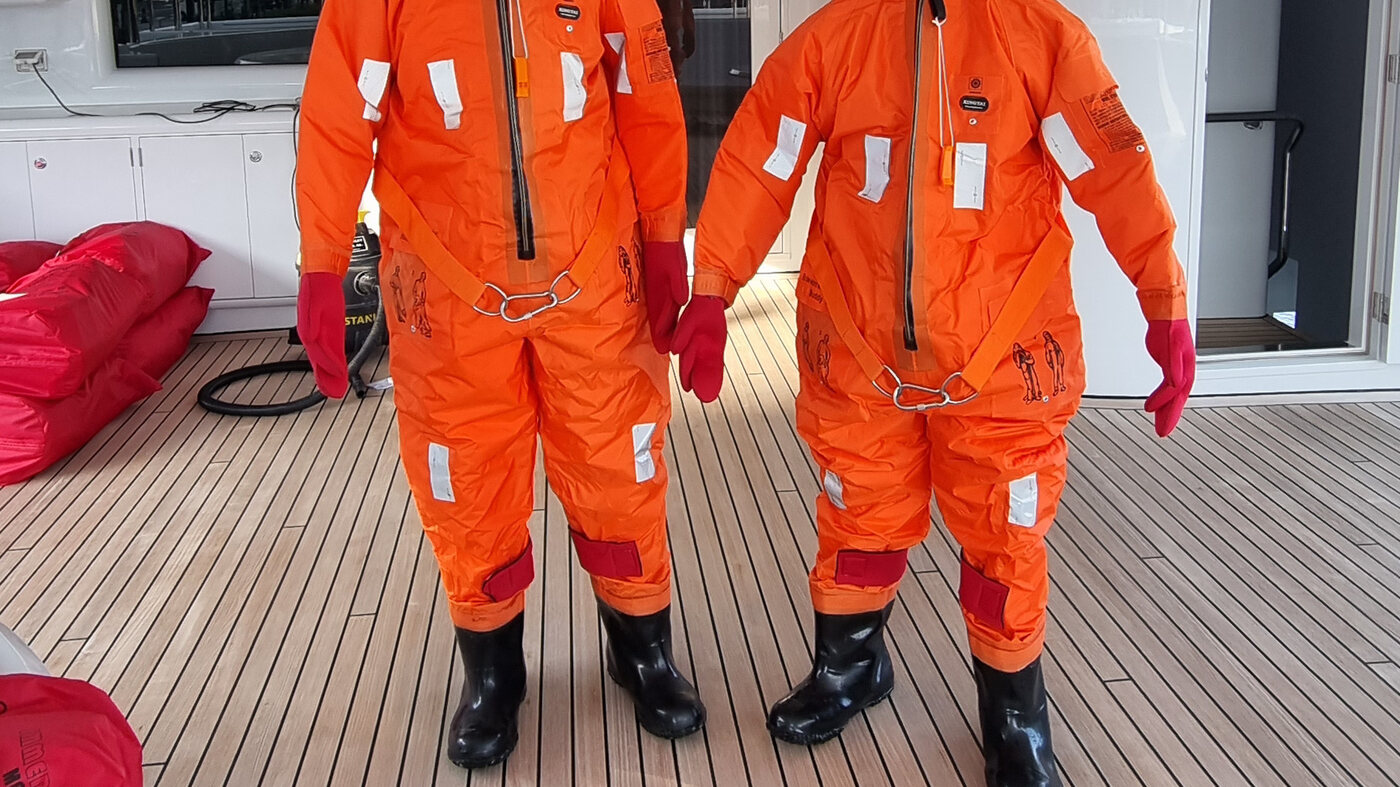
- Personal Survival Techniques (PST): abandoning ship, life rafts and staying alive in the water.
- Fire Prevention and Firefighting: the most hands-on and usually the most expensive module.
- Elementary First Aid: includes CPR.
- Personal Safety and Social Responsibilities (PSSR): working safely and living with a crew.
- Security Awareness: short, and partly online at some providers.
It is the same legal minimum whichever provider you pick. For what else you do and don’t need before your first job, see our guide to whether you need a superyacht course.
Which NZ providers run STCW Basic Safety Training, and what do they charge?
Here is what each provider’s own page says. Fees are in NZD, and each provider quotes them slightly differently, so read the notes under the table.
| Provider | Where | Length | Published fee |
|---|---|---|---|
| MIT | Auckland (NZ Maritime School, with firefighting at the Mahuika facility in Mt Albert and pool sessions at Tepid Baths or Albany Stadium Pool) | 8 days, not counting weekends, about 8am to 3:30pm | About $3,140 (2026), about $3,427 (2027), GST inclusive |
| Toi Ohomai | Tauranga (Windermere campus) | 1 week full-time, Monday to Sunday, plus online study | $2,732 (2026), $2,842 (2027), the five module fees added together |
| Vertical Horizonz | A VH training centre near you, or onsite at a location you arrange | 7.5 days | $2,250 ex GST (about $2,588 with 15% GST added) |
| NMIT | Nelson, with firefighting at the Richmond campus | 7 full weekdays plus online study | No fee listed on the page |
Checked 1 November 2026 on each provider’s page. MIT marks its fees “approx.” and says short course fees include GST. Toi Ohomai calls its fees indicative and includes the student levy; the totals are our addition of its five 2026 and 2027 module fees. Vertical Horizonz lists $2,250 ex GST only, so the $2,588 figure is our calculation at 15% GST. NMIT says its fee includes the student levy but doesn’t state an amount.
The cheapest sticker price isn’t automatically the best deal. Vertical Horizonz says it runs groups of 10 to 12, so a course only goes ahead when it fills. MIT and Toi Ohomai publish fixed intake dates. NMIT showed no start dates when we checked, only a prompt to register for new dates.
How does this fit the $2,600 to $3,150 range elsewhere on the site?
Our STCW and ENG1 guide uses roughly $2,600 to $3,150, built from Toi Ohomai’s 2026 total, Vertical Horizonz’s price with GST and MIT’s 2026 fee. If you start in 2027, MIT’s published fee rises to about $3,427 and Toi Ohomai’s total to $2,842, so budget a little above the top of that range for MIT.
Not sure which provider or intake suits you?
Book a free discovery call
“It never felt like a course or a programme — it felt like having someone in your corner who genuinely cared about where you ended up. Nick showed me I already had more to offer than I thought. Six months later I was a deckhand. I’ve sailed to Fiji. I’m 19.” — Freddie MHospitality → Deckhand · sailed to Fiji · age 19
What do you need before you can enrol?
Requirements differ a little by provider, but three things come up repeatedly:
- A medical. Toi Ohomai asks for a student medical declaration plus a current medical certificate and accepts a Dive medical, a Maritime NZ seafarers medical or an MCA ENG1. Vertical Horizonz asks for a current seafarers medical or its own medical form. NMIT asks for a GP medical certificate or a seafarers medical. This is one more reason to book the ENG1 first.
- Basic swimming. Vertical Horizonz requires you to swim 25 metres unaided and float unaided for 60 seconds. Toi Ohomai says you need to swim with and without a lifejacket and tread water while clothed.
- Workable English and ID. Both Toi Ohomai and Vertical Horizonz list an English requirement, and Vertical Horizonz asks for proof of identity such as a passport or driver licence.
MIT’s page points you to each individual course for entry requirements, so ask them directly what to bring.
What does the week actually look like?
Toi Ohomai publishes the most detailed timetable. Personal Survival is Monday and Tuesday (8am to 4pm), Basic Firefighting is Wednesday and Thursday (8am to 5.30pm), Personal Safety and Social Responsibility is Friday morning with compulsory online study, and Elementary First Aid is Saturday and Sunday (9am to 3.30pm). Security Awareness is online. Vertical Horizonz gives the module lengths instead: firefighting 2.5 days, survival 2 days, first aid 1.5 days, PSSR 1 day and security awareness 4 hours.
Plan on a full week with nothing else on, including a weekend if you pick Toi Ohomai. Wear clothes you don’t mind getting wet; our STCW guide covers what happens on the day.
Which intake lines up with a March arrival in the Med?
Work backwards from when you want to be on the docks. Our Mediterranean vs Caribbean season guide points new crew at a March arrival, and MIT says certificates may take up to 10 working days to be issued after you finish (Toi Ohomai says about 10 days). So the finish date isn’t the date you can travel with paperwork in hand.
| Provider | Intakes between now and March 2027 |
|---|---|
| MIT | 2 to 11 Nov, 23 Nov to 2 Dec, 30 Nov to 9 Dec 2026; 18 to 27 Jan, 8 to 17 Feb, 11 to 22 Feb, 15 to 24 Mar 2027 |
| Toi Ohomai | 30 Nov 2026; 15 Feb, 1 Mar, 15 Mar 2027 |
| Vertical Horizonz | Dates are on a separate bookings site; ask for your region |
| NMIT | None published when we checked |
Dates as listed on each provider’s page on 1 November 2026. They change, so confirm before you book.
A 15 to 24 March course is too late for a March arrival. If a mid-March arrival is the goal, the December and January intakes leave you room for a delay with the certificates. Putting the ENG1 first, then STCW, then flights fits the order in our ENG1 booking timeline.
What is the course actually like?
I did my STCW with Vertical Horizonz, and I’d recommend them. They’re privately run, very organised, and the teachers were great. I had first booked through an institute of technology, but heavy rain led to that course being cancelled, so I ended up driving to Wellington to do it with them instead. They were accommodating and helpful about it.
The firefighting was a lot of fun. Nobody on my course was nervous; it was more excitement than nerves. Everyone got on well and swapped numbers, which is a good way to start building connections. Even if you never go into yachting, you leave with useful skills, including first aid, which I’ve used many times since.
The practical lesson from the cancellation: don’t leave your booking until the last minute, and ask any provider what happens if a course is cancelled or moved.
How do you choose between providers?
- Dates first. A course that finishes in time with certificates issued beats a cheaper one that doesn’t.
- Then location. MIT is Auckland, Toi Ohomai is Tauranga and NMIT is Nelson. Vertical Horizonz says it can come onsite or use a centre near you. Add any flights and accommodation to the price.
- Then price. Compare like with like: GST, student levy and whether the total covers all five modules.
- Ask about recognition. Our STCW guide advises an MCA-recognised provider. Ask each provider in writing whether their certificates are accepted for yacht crew work and keep the reply.
- Australian options. If NZ dates are full, our Australian deckhand guide lists AMSA providers and prices.
Can you do the modules separately?
Toi Ohomai says each course can be completed individually and prices them that way, and MIT gives you a certificate per course. That helps if you already hold a current first aid or other certificate, but check with the yacht or provider that it is accepted before skipping a module.
Do STCW certificates expire?
Vertical Horizonz says refresher training for Personal Survival Techniques and Fire Prevention and Firefighting is required every five years. Toi Ohomai lists refresher courses separately (2026: Personal Survival $498, Basic Firefighting $868) and asks for a letter confirming sea service. Diarise the date, as you would for your ENG1.
What should be on your STCW checklist?
- Book the ENG1 first, then the STCW.
- Pick an intake that finishes at least two weeks before you need the certificates.
- Confirm the fee, GST and what is included in writing.
- Check your swimming and bring ID and your medical.
- Skip optional extras until a role asks for them.
The full list is in our free First Season Checklist. Once the certificates are done, the next step is the job hunt, and our coaching programme exists to help with it.
STCW course FAQs
How much does an STCW course cost in NZ?
On the providers' own pages (checked 1 November 2026): MIT about $3,140 for 2026 and $3,427 for 2027, Toi Ohomai $2,732 for 2026 and $2,842 for 2027 as the five module fees added together, and Vertical Horizonz $2,250 ex GST. NMIT lists no fee.
How long does STCW Basic Safety Training take?
MIT runs 8 days not counting weekends, Vertical Horizonz 7.5 days, NMIT 7 full weekdays plus online study, and Toi Ohomai one week including a weekend. Certificates can then take up to 10 working days to arrive.
Do I need my ENG1 before I do the STCW?
Providers ask for a medical. Toi Ohomai accepts an MCA ENG1, Vertical Horizonz asks for a seafarers medical or its own form, and NMIT asks for a GP or seafarers medical. We recommend doing the ENG1 first in case anything flags.
Can I do STCW modules one at a time?
Toi Ohomai says each course can be completed individually, and MIT issues a certificate for each module. Confirm that a partial set will be accepted for the job you are aiming for.
How long is STCW valid for?
Vertical Horizonz says refreshers for Personal Survival Techniques and Fire Prevention and Firefighting are required every five years. Confirm the exact rules with your provider.
Sources, all checked 1 November 2026: MIT STCW Basic Training, Toi Ohomai STCW-10, Vertical Horizonz STCW Basic Training, NMIT STCW Basic Safety Training.
Thinking about a career on superyachts?
If you want to talk through your options, no pressure, just an honest conversation about what's possible, get in touch.
Book a discovery call →Prefer email? Get in touch directly.
“He wanted to make the most of his gap year — not the ordinary version of it. Three months later he’s working on multi-million dollar yachts in the Med, watching the sun set over the Balearic Sea, living a life most people only dream about.” — Antoni MHigh school → full-time in Palma · age 19

Nick studied at university in Dunedin before finding his way onto superyachts with zero prior experience and sailing around the world. He's worked in recruitment and education, watched good candidates get overlooked for doing the wrong training in the wrong ports, and now coaches young Kiwis through the same journey: honest, one-on-one and industry-backed.
“He wanted to make the most of his gap year — not the ordinary version of it. Three months later he’s working on multi-million dollar yachts in the Med, watching the sun set over the Balearic Sea, living a life most people only dream about.” — Antoni MHigh school → full-time in Palma · age 19
Nick studied at university in Dunedin before finding his way onto superyachts with zero prior experience and sailing around the world. He's worked in recruitment and education, watched good candidates get overlooked for doing the wrong training in the wrong ports, and now coaches young Kiwis through the same journey: honest, one-on-one and industry-backed.